
 April 29, 2026, 8:54 a.m.
AI-Powered Penetration Testing: The Next-Generation Approach to Cybersecurity
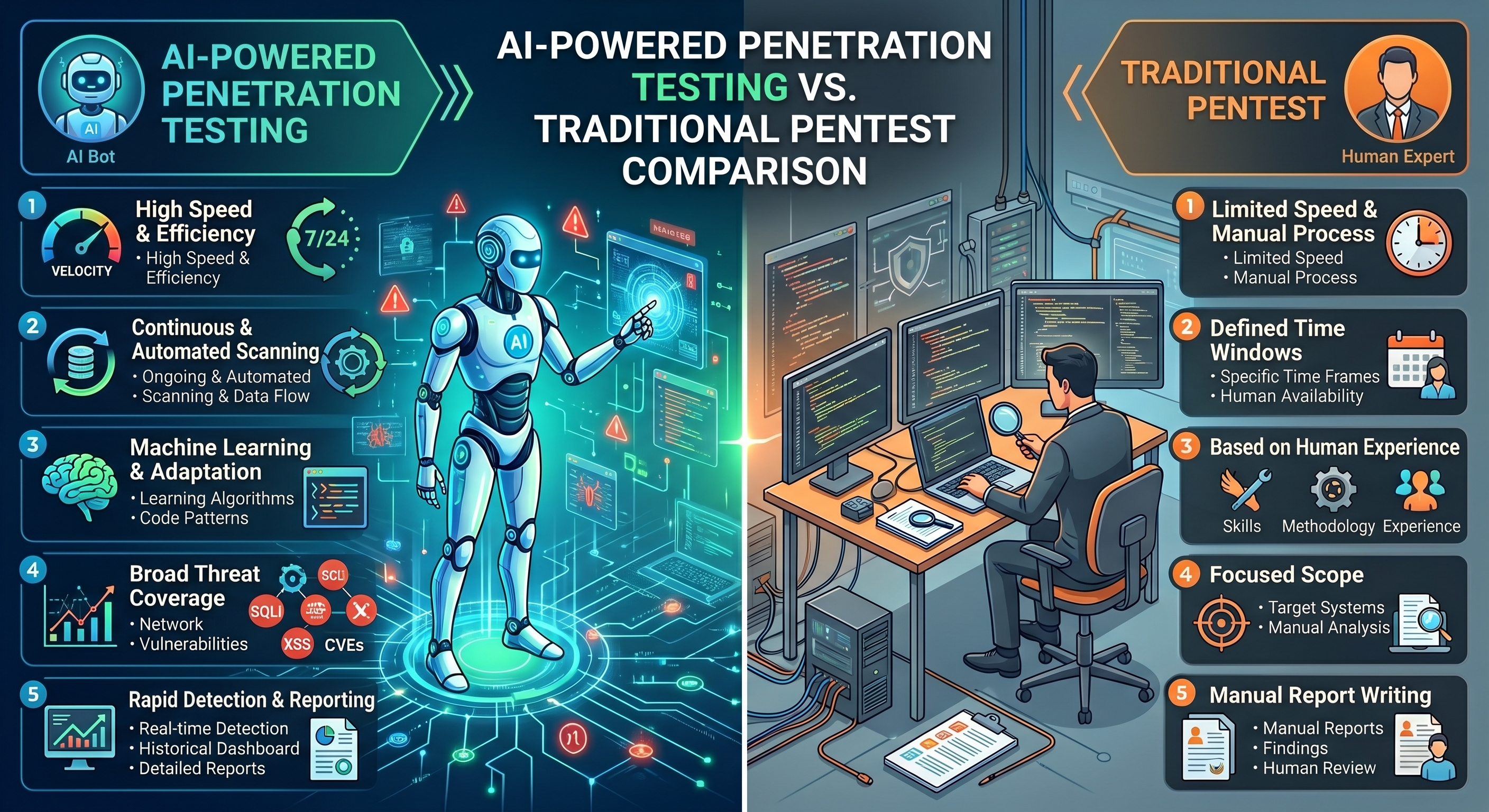
As the cybersecurity world faces constantly evolving threats, the methods organizations use to strengthen their defense mechanisms are also evolving. AI-powered penetration testing overcomes the limitations of traditional security testing, offering organizations a more comprehensive and effective security assessment. This innovative approach provides unique advantages by combining the capabilities of cybersecurity professionals with artificial intelligence's computational power and learning capacity.
What is AI-Powered Penetration Testing?
AI-powered penetration testing is an advanced cybersecurity practice where machine learning algorithms and artificial intelligence technologies are integrated into vulnerability detection, threat modeling, and attack simulation processes. This approach enriches the human factor-based capacity of traditional manual penetration testing with AI's speed, scalability, and continuous learning capabilities.
Modern AI-powered pentest tools can analyze complex network structures, make meaningful inferences from large datasets, and detect security vulnerabilities that human testers might overlook. These systems use advanced techniques such as deep learning, natural language processing, and behavioral analytics to make cybersecurity testing more comprehensive and effective.
The Role of AI Technologies in Penetration Testing
Artificial intelligence systems play many different roles in penetration testing processes:
- Automated Discovery and Mapping: AI algorithms can quickly extract network topology by scanning target systems and create asset inventories.
- Behavioral Anomaly Detection: Machine learning models can identify potential security vulnerabilities and abnormal activities by learning normal system behaviors.
- Intelligent Payload Generation: AI systems can develop customized attack vectors and exploits based on the characteristics of the target system.
- Prioritization and Risk Analysis: Detected security vulnerabilities are automatically classified and prioritized by artificial intelligence according to business impact and exploitation probability.
A Brief Look at Traditional Penetration Testing
Traditional penetration testing is a manual and methodological process in which cybersecurity experts identify security vulnerabilities by attacking an organization's systems, networks, and applications in a controlled manner. This approach relies heavily on human expertise, experience, and intuition.
The traditional pentest process typically consists of reconnaissance, scanning, gaining access, privilege escalation, and reporting phases. Experienced security experts conduct a systematic assessment using their own knowledge and industry standards in each of these phases.
Limitations of the Traditional Approach
While traditional penetration testing provides valuable insights, it has some structural limitations:
- Time Constraints: Comprehensive manual tests can typically take weeks or months, creating delays in a dynamic threat environment.
- Human Capacity: Testers can assess a limited number of systems simultaneously, and the fatigue factor can lead to errors.
- Coverage Limitations: Testing all possible attack vectors manually in complex and large-scale systems may not be practical.
- Consistency Issues: Different testers' approaches and experience levels can create variability in results.
- Cost Factor: Continuous employment of highly qualified security experts requires significant costs.
Advantages of AI-Powered Penetration Testing

1. Speed and Scalability
AI-powered systems provide tremendous speed advantages compared to traditional methods. They can simultaneously scan and analyze thousands of endpoints and hundreds of applications. AI systems can complete scanning operations in minutes that would take a human tester days to complete. This speed advantage allows organizations to assess their security posture in near real-time.
2. Continuous and Dynamic Testing Capacity
Traditional penetration tests are typically periodic events conducted once or several times a year. AI-powered solutions, however, can operate continuously and evaluate changes in systems instantly, quickly detecting new security vulnerabilities. This continuity, which is compatible with the DevSecOps approach, can keep pace with modern software development cycles.
3. Broader Coverage and Depth
Artificial intelligence systems offer coverage beyond human capacity, testing millions of possible attack combinations. Machine learning algorithms can automatically discover complex vulnerability chains and multi-stage attack scenarios. This comprehensive approach reveals critical security issues that might be overlooked in manual testing.
4. Consistency and Objectivity
AI-powered tests produce consistent results every time using predefined algorithms and parameters. Variability, biases, and fatigue-induced errors that can be caused by the human factor are minimized. This consistency enables the comparison of tests conducted at different times and objective measurement of improvements in security posture.
5. Advanced Threat Intelligence Integration
Modern AI systems can continuously process global threat intelligence feeds to integrate the most current attack techniques and exploits into testing processes. Machine learning models quickly learn emerging threat vectors and incorporate them into test scenarios. This dynamic learning capacity helps organizations adopt a proactive stance against zero-day vulnerabilities and evolving threats.
6. Cost Efficiency
After the initial investment cost, AI-powered penetration testing solutions provide significant cost advantages in the long term. Continuous testing capacity reduces recurring manual testing costs. The efficiency provided by automation allows security teams to focus on strategic activities. Additionally, early detection can prevent the costly consequences of potential security breaches.
7. Enhanced Reporting and Visualization
AI-powered systems generate detailed reports with advanced data visualization capabilities, making complex security findings more understandable for both technical teams and executive management. Automated reporting reduces the time between testing and remediation, accelerating the security improvement cycle.


Similar Posts