
 May 1, 2026, 4:36 p.m.
Cybersecurity in 2026: The Top 10 Threats Companies Need to Know
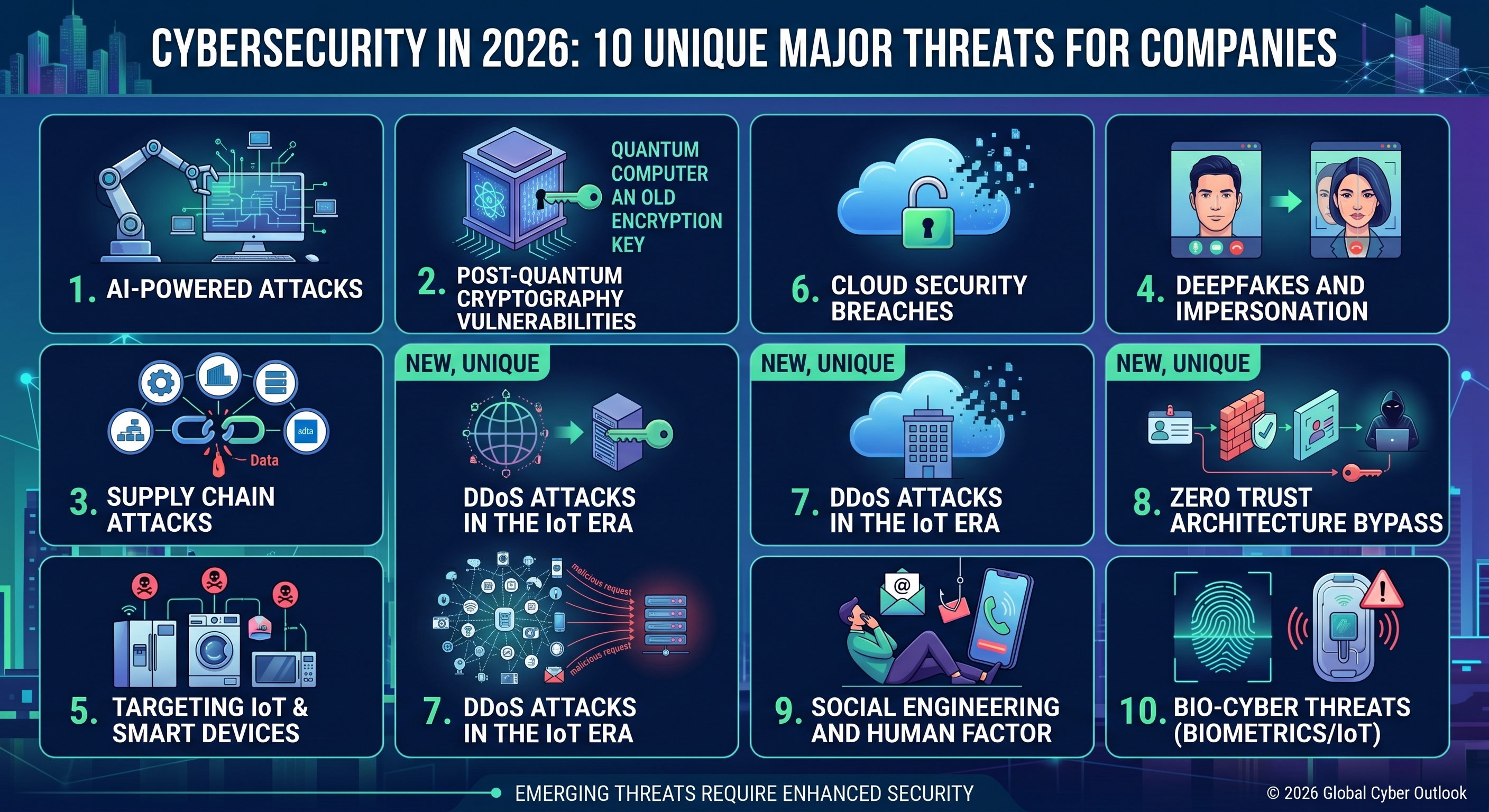
In today's rapidly accelerating digital transformation, cyber threats are evolving and becoming increasingly sophisticated at the same pace. As we approach 2026, the threat landscape facing corporate security teams appears far more complex and dangerous than in previous years. For companies to maintain their competitive edge and ensure business continuity, it is critically important to identify these threats in advance and take necessary precautions.
As Nordis Global, we closely monitor global cybersecurity trends and provide consulting services to help Turkish companies prepare for these threats. In this comprehensive analysis, we will examine in detail the ten most significant cybersecurity threats companies will face in 2026.
1. AI-Powered Advanced Cyber Attacks

Artificial intelligence and machine learning technologies have become powerful weapons not only for defense but also in the hands of attackers. By 2026, cybercriminals have reached a level where they can bypass traditional security systems, mimic behavioral analyses, and automatically discover zero-day vulnerabilities using AI-powered tools.
The most dangerous aspect of this threat is that attacks have become personalized and adaptive. AI algorithms can learn a target organization's security habits and launch attacks from the weakest points. Companies must develop AI-based defense systems and train their security teams on this topic to counter this threat.
2. Quantum Computing Threats and Cryptography Breaking
The development of quantum computers is one of the biggest factors threatening the security of current encryption algorithms. Although quantum computers are not yet widespread in 2026, attackers adopting the "harvest now, decrypt later" strategy are collecting encrypted data with plans to decrypt it in the future.
This threat is of critical importance especially for financial institutions, the healthcare sector, and public institutions. The transition process to post-quantum cryptography standards should have begun. Work must be done on quantum-resistant algorithms published by NIST, and existing infrastructure needs to be made compatible with these standards.
3. Increase in Supply Chain Attacks
Since modern companies operate with extensive supply chains, a security vulnerability in any link of these chains can compromise the entire system. In 2026, supply chain attacks have become more complex and multi-layered. Attackers now infiltrate systems through suppliers and business partners with weaker security walls, rather than targeting directly.
Software supply chain attacks are particularly concerning. Malicious code embedded through open-source libraries, third-party components, and cloud services can affect thousands of organizations simultaneously. It is critical for companies to regularly audit all suppliers, implement zero-trust architecture, and verify the security of software components.
4. Deepfake and Social Engineering 2.0
With the advancement of deepfake technology, social engineering attacks have gained a new dimension. In 2026, attackers can realistically mimic the voices and images of senior executives to deceive employees. The widespread use of video conferencing tools has increased the impact of such attacks.
This type of attack, known as CEO fraud, causes millions of dollars in damage to companies. Attackers using real-time deepfake video calls to issue financial transaction instructions are rendering traditional verification methods ineffective. Companies need to protect themselves against this threat with multi-factor authentication systems, out-of-band verification protocols, and employee awareness training.
5. Attacks on IoT and OT Systems
The explosive increase in the number of Internet of Things (IoT) devices and Operational Technology (OT) systems has created new attack surfaces. In 2026, smart city infrastructures, industrial control systems, and connected medical devices are among the primary targets of cyber attackers.
The fact that most of these devices are not designed with security as a priority, use of default passwords, and inadequate update mechanisms create serious security vulnerabilities. Botnet attacks, ransomware, and critical infrastructure sabotage exploit these weaknesses. It is vital for companies to create IoT device inventories, implement network segmentation, and manage regular security patches.
6. Ransomware 3.0: Multiple Extortion Models
Ransomware attacks have taken on a much more sophisticated and destructive form in 2026. Multiple extortion models are now being implemented that not only encrypt data but also include threats to leak stolen data, launch DDoS attacks, and notify customers/partners.
The proliferation of Ransomware-as-a-Service (RaaS) platforms enables even individuals without technical knowledge to launch professional attacks. Critical infrastructure, healthcare services, and the public sector are among the most targeted areas. Companies need to be prepared for this threat with regular backup strategies, incident response plans, and cyber insurance policies.
7. Cloud Security Vulnerabilities and Misconfigurations
The proliferation of cloud computing has brought new security challenges. In 2026, the vast majority of companies operate in hybrid or multi-cloud environments, and these complex structures become vulnerable to misconfigurations.
Publicly accessible S3 buckets, insufficient access controls, unencrypted data storage, and identity management vulnerabilities are commonly encountered issues. The use of Cloud Security Posture Management (CSPM) tools, continuous monitoring, and automated compliance controls are the cornerstones of cloud security

Similar Posts