
 April 29, 2026, 8:55 a.m.
Vulnerability Detection with AI: How Does It Accelerate Pentest Processes?
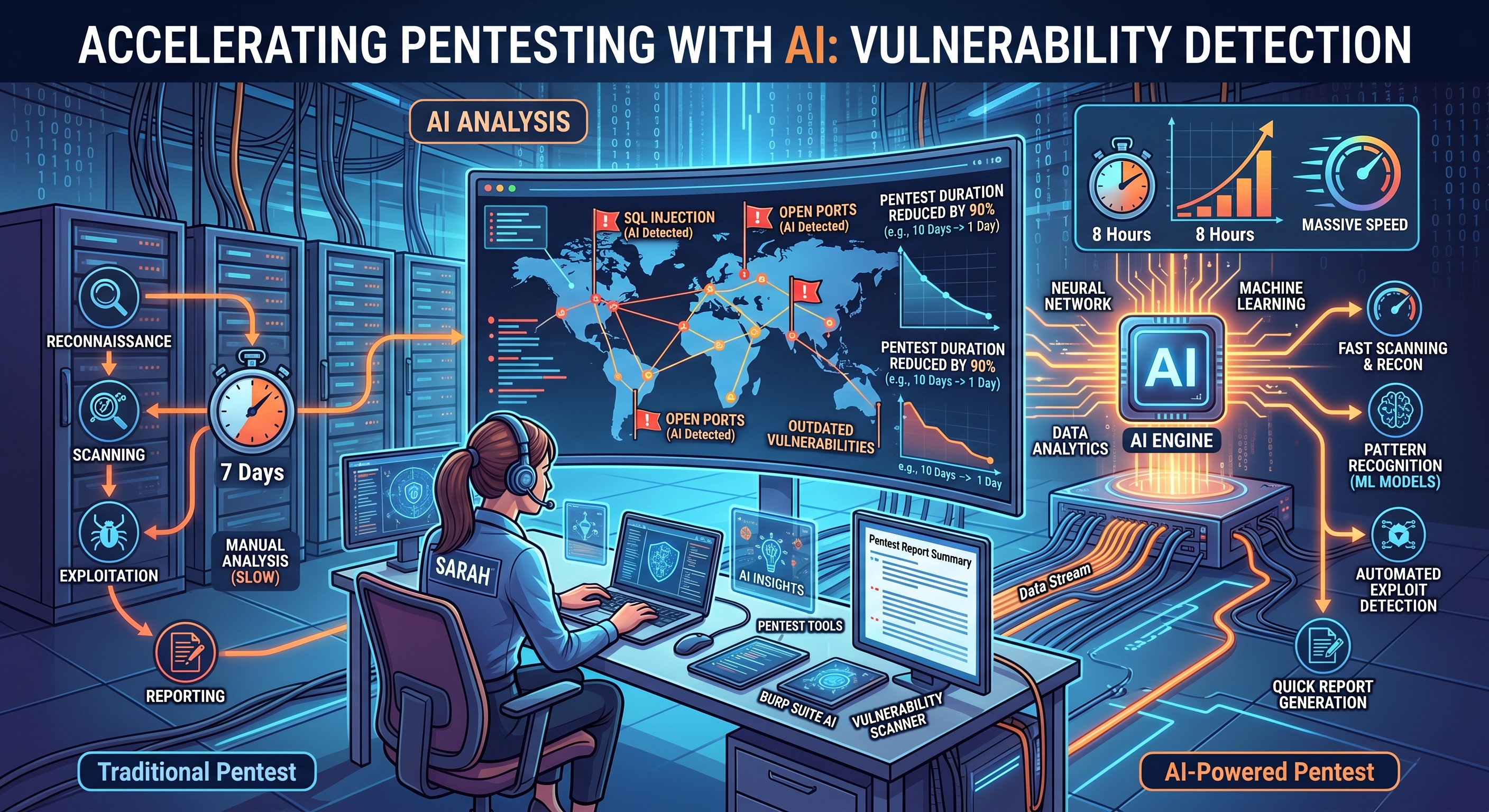
In the field of cybersecurity, penetration testing (pentest) is a critical process for identifying security vulnerabilities in corporate systems. Traditional pentest methods are based on expert security analysts manually scanning systems and searching for vulnerabilities. However, today's integration of artificial intelligence technologies into cybersecurity is both accelerating these processes and making them more effective. AI-powered vulnerability detection is revolutionizing pentest processes, strengthening organizations' security posture.
As corporate networks and applications become more complex every day, attack surfaces are also expanding. Manually detecting all potential vulnerabilities in these complex environments has become a time-consuming and costly process. The inclusion of artificial intelligence and machine learning algorithms in pentest processes offers an innovative approach to overcome this challenge.
Limitations of Traditional Pentest Processes

In traditional penetration testing, security experts analyze target systems with a systematic approach. This process typically consists of information gathering, vulnerability scanning, exploitation, and reporting stages. Although effective, this approach has some significant limitations:
- Time Constraints: A comprehensive pentest study can take weeks depending on system size
- Human Error: Vulnerabilities missed in manual processes continue to pose risks
- Scope Limitations: Testing all possible attack vectors is not practically feasible
- Currency Issue: New security vulnerabilities may emerge before detected vulnerabilities are reported
- Cost Factor: Continuous employment of expert security professionals brings high costs
Integration of AI Technologies into Pentest Processes
AI-powered vulnerability detection optimizes pentest processes using advanced technologies such as machine learning, deep learning, and natural language processing. These technologies enable faster, more comprehensive, and consistent results by overcoming the limitations of traditional methods.
Anomaly Detection with Machine Learning
Machine learning algorithms can automatically detect abnormal activities and potential vulnerabilities by learning normal system behaviors. These algorithms have the ability to predict new threats by analyzing past attack patterns and vulnerability characteristics. They deliver much more effective results compared to traditional signature-based systems, especially in detecting zero-day vulnerabilities.
Automated Code Analysis and Security Auditing
AI-powered tools can detect potential security vulnerabilities by analyzing source code both statically and dynamically. These tools can automatically identify common vulnerabilities such as SQL injection, cross-site scripting (XSS), and buffer overflow. Additionally, by learning insecure patterns in code, they have the capability to detect previously unseen vulnerability types.
Intelligent Targeting and Prioritization
AI systems can automatically classify and prioritize detected vulnerabilities according to risk level, potential impact, and exploitability. This feature allows security teams to focus their resources on the most critical threats, accelerating remediation processes.
Accelerating Pentest Processes with AI

Automatic Discovery and Mapping
AI-powered tools can automatically discover and map the network topology, open ports, running services, and technology stack of target systems. While this process can take hours or days with traditional methods, it can be completed in minutes with AI. Additionally, these tools continuously learn, becoming smarter with each scan and producing more accurate results.
Accelerated Vulnerability Scanning
AI algorithms can test millions of possible attack vectors in parallel and detect vulnerabilities much faster compared to traditional methods. Furthermore, by learning from previous scan results, they have the ability to focus on the most likely vulnerability points. This significantly shortens scanning time and enables more efficient use of resources.
Intelligent Exploitation and Verification
AI-powered pentest tools can automatically exploit detected vulnerabilities to verify the actual threat level. This process significantly reduces false positives and prevents wasting security teams' time. Additionally, by automatically creating exploit chains, they can detect complex attack scenarios where multiple vulnerabilities can be used together.
Continuous and Adaptive Testing
While traditional pentest studies are generally conducted at specific intervals, AI-powered systems can perform continuous monitoring and testing. They can automatically detect system changes and immediately identify newly emerging vulnerabilities. This continuous security posture assessment enables organizations to adapt more quickly to the dynamic threat environment.
AI-Powered Pentest in Enterprise Applications
In enterprise environments, AI-powered vulnerability detection can be applied in many different areas. AI tools integrated into DevSecOps processes can perform automatic security tests at every stage of the software development lifecycle. This approach ensures that security vulnerabilities are detected and fixed before reaching the production environment.
Cloud infrastructure security requires special attention due to its complexity. AI-powered tools can continuously analyze cloud configurations to detect misconfigurations and security vulnerabilities. They can also automatically scan newly added resources by adapting to the dynamic nature of cloud environments.
Human-AI Collaboration
The integration of AI into pentest processes offers an approach that supports human security experts rather than replacing them. AI automates repetitive and time-consuming tasks, allowing experts to focus on strategic thinking, complex problem solving, and creative attacks



Similar Posts