
 July 25, 2026, 1:08 p.m.
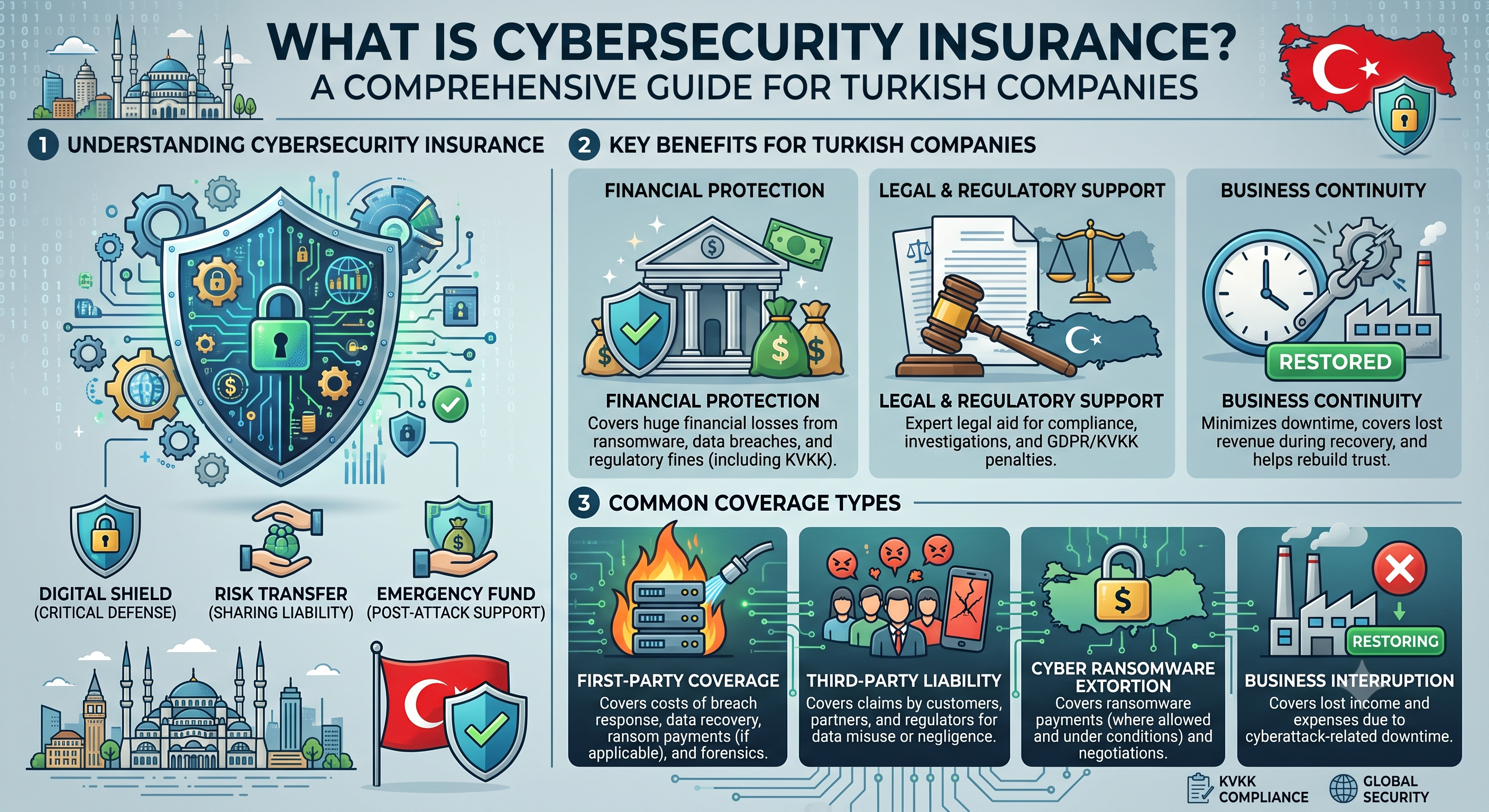
What is Cybersecurity Insurance? A Comprehensive Guide for Turkish Companies
In today's rapidly advancing digital transformation era, cyberattacks have become a serious threat faced not only by large corporations but by businesses of all sizes. As ransomware attacks, data breaches, and cyber espionage incidents increase day by day, the financial losses businesses face can reach millions of liras. At this point, cybersecurity insurance emerges as an indispensable component of modern risk management.
Cybersecurity insurance is a specialized type of insurance that covers financial losses, legal expenses, and operational damages that businesses may encounter as a result of cyberattacks. This type of insurance, which has gained popularity in Turkey in recent years, has become strategically important for companies, especially due to the obligations brought by KVKK (Turkish Data Protection Law) and other data protection regulations.
Why is Cybersecurity Insurance Necessary?

Traditional insurance products cover risks to physical assets; however, damage to digital assets, data losses, or losses resulting from cyberattacks are generally not covered by standard business insurance policies. This is precisely where cybersecurity insurance comes into play.
62% of companies operating in Turkey have been exposed to at least one cyberattack in the last two years. The average cost of these attacks can reach 150,000 TL for SMEs and millions of liras for large enterprises. These figures clearly demonstrate why cybersecurity insurance is critically important.
Effects of Cyberattacks on Businesses
- Direct Financial Losses: System downtime, ransom payments, data recovery costs
- Reputational Damage: Loss of customer trust and decline in brand value
- Legal Liabilities: Penalties imposed due to KVKK violations and compensation lawsuits
- Operational Disruptions: Business process interruptions and production losses
- Customer Loss: Customers turning to competitors following data breaches
What Does Cybersecurity Insurance Cover?
Cybersecurity insurance policies are generally divided into two main categories: first-party coverages and third-party coverages. Both categories are designed to cover different risk areas for businesses.
First-Party Coverages (Business's Own Losses)
First-party coverages cover costs directly faced by the business following a cyber incident:
- Data Recovery Costs: Expenses for recovering lost or damaged data after a cyberattack
- Business Interruption Loss: Revenue losses during the period when systems are not operational
- Ransomware Payments: Some policies cover ransom amounts required in ransomware attacks
- Crisis Management and PR Services: Reputation management, media consulting, and crisis communication costs
- Cyber Crime Investigation: Digital forensics work conducted to investigate the incident and identify perpetrators
- Notification Costs: Notifications to affected individuals and the Personal Data Protection Authority as required by KVKK
- Credit Monitoring Services: Protective services offered to customers affected by data breaches
Third-Party Coverages (Liabilities to Others)
Third-party coverages cover the business's liabilities to third parties due to cyber incidents:
- Data Breach Liability: Protection against compensation lawsuits in case of customer and employee data theft
- Privacy Obligation Violation: Legal liabilities resulting from violations of personal data protection obligations
- Regulatory Penalties: Administrative fines imposed under KVKK and other legislation
- Media Liability: Copyright infringements and defamation lawsuits due to online publications
- Network Security Liability: Liabilities arising when the company network is used to attack other organizations
Factors Affecting Cybersecurity Insurance Premiums

Many factors play a role in determining cybersecurity insurance premiums. Insurance companies calculate premium amounts by evaluating the business's risk profile. The main factors considered in this process include:
Industry and Field of Activity
Industries that process high volumes of sensitive data, such as finance, healthcare, e-commerce, and technology sectors, are evaluated in higher risk categories and their premiums are determined accordingly. For example, a hospital or bank carries higher risk than a manufacturing company.
Company Size and Revenue
The business's annual turnover, number of employees, and customer base size play an important role in premium calculation. Larger companies generally face higher premiums due to potentially higher losses.
Existing Security Infrastructure
The company's existing cybersecurity measures directly affect the premium amount. Businesses with strong security measures can benefit from lower premiums:
- Presence of multi-factor authentication systems
- Regular backup and disaster recovery plans
- Up-to-date firewall and antivirus solutions
- Conducting penetration tests and security assessments
- Cybersecurity awareness training provided to employees
- Presence of security certifications such as ISO 27001
Past Cyber Incident History
Whether the business has previously been exposed to cyberattacks and how it responded to these incidents is considered in risk assessment

Similar Posts