
 June 16, 2026, 9:34 a.m.
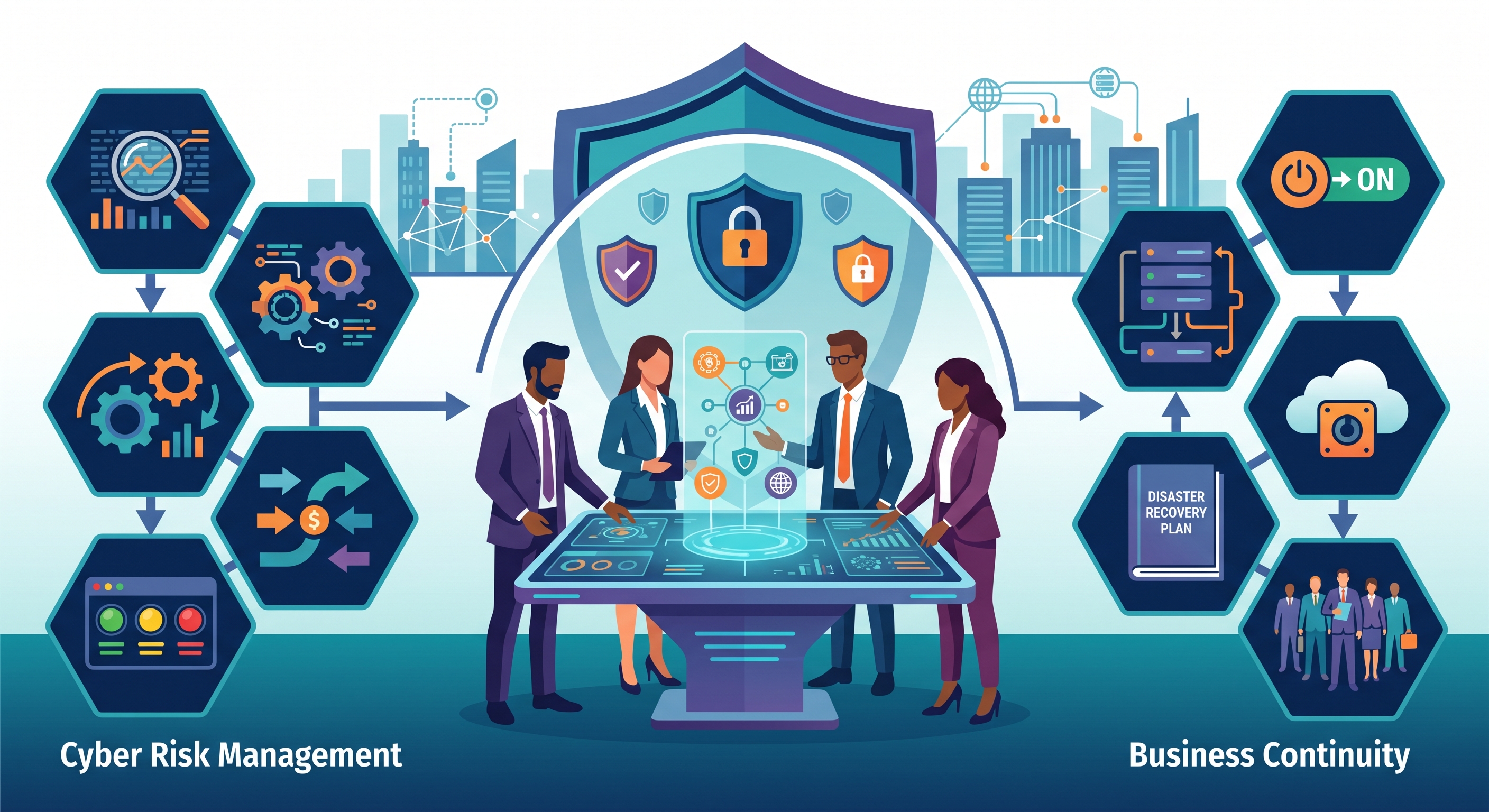
Cyber Risk Management and Business Continuity for Senior Management: C-Level Awareness Training
In today's digitizing business world, cybersecurity is no longer just the responsibility of the IT department, but a critical issue that must be on senior management's strategic agenda. Cyber threats facing organizations pose significant risks in terms of financial losses, reputational damage, and operational disruptions. According to IBM's 2023 data, the average cost of a data breach has reached $4.45 million. This figure clearly demonstrates why senior management's strategic approach to cybersecurity is vitally important.
As Nordis Global, our cybersecurity awareness training specifically designed for C-Level executives provides a comprehensive perspective on risk management and business continuity. This training series enables senior executives to integrate cyber risks with business strategies and effectively evaluate the cybersecurity dimension when making critical decisions.

Cybersecurity: Now a Board-Level Matter
Like traditional business risks, cyber risks have become an integral part of the organization's overall risk portfolio. Senior management must understand the potential business impacts of cybersecurity incidents and develop proactive strategies against them. Cyberattacks are not just a technical problem, but a complex management issue with financial, legal, operational, and reputational dimensions.
C-Level executives' awareness of cybersecurity is necessary not only to respond to attacks, but also to safely achieve the organization's digital transformation goals. Senior management's cybersecurity awareness is also the foundation for establishing a security culture throughout the organization.
Financial Dimension: The True Cost of Cyber Breaches
The average breach cost of $4.45 million does not only reflect direct technical intervention and system repair expenses. Behind this figure lies a much broader cost spectrum:
- Direct Costs: Incident response teams, forensic analyses, system restoration operations, legal consulting, and customer notification processes
- Business Interruption Costs: Production halts, service downtime, lost business opportunities, and customer loss
- Reputation and Trust Loss: Decline in brand value, erosion of customer trust, and market share loss
- Long-Term Effects: Increases in insurance premiums, regulatory investigations, lawsuits, and decreased investor confidence
- Compliance and Penalty Costs: Administrative fines due to non-compliance with KVKK, GDPR, and sectoral regulations
When senior management understands these financial impacts, they begin to view cybersecurity investments not as a cost, but as a strategic investment. Expenditures for risk reduction and business continuity are extremely rational when compared to potential losses.
Cyber Risk Management: From Risk Matrix to Strategic Decisions
Effective cyber risk management is the process of systematically identifying, assessing, prioritizing, and managing risks. Our training designed for C-Level executives focuses on business impacts rather than complex technical details.
Risk Matrix and Prioritization
The risk matrix supports senior management's decision-making process by visualizing the likelihood and potential impact of cyber threats. Through this matrix:
- Which risks threaten critical business processes is determined
- The most effective allocation of limited resources is planned
- Risk acceptance, transfer, reduction, or prevention strategies are clarified
- Concrete data for return on investment (ROI) calculations is obtained
Risk assessment should cover not only technical vulnerabilities, but also the human factor, third-party risks, supply chain security, and risks brought by new technology adaptations. With this holistic approach, senior management understands the organization's true risk profile and develops appropriate strategies.

Business Continuity Planning: BCP and DRP Difference
Business continuity and disaster recovery planning are critical processes that ensure the organization's survival in the face of cyber incidents. However, these two concepts are often confused.
Business Continuity Plan (BCP)
BCP is a comprehensive plan designed to ensure the continuation of critical business functions in the event of any interruption. BCP's focus is on business processes and service continuity:
- Identification and prioritization of critical business functions
- Determination of alternative business processes and backup resources
- Personnel, supplier, and stakeholder management strategies
- Communication plans and crisis management protocols
- Coordinated response mechanisms across the entire organization
Disaster Recovery Plan (DRP)
DRP specifically focuses on the recovery of IT infrastructure and systems. It forms the technology component of BCP:
- Backup and recovery procedures for critical systems
- Alternative data centers and redundant system architectures
- System restoration priorities and sequences
- Technical teams' roles and responsibilities
- Testing of technology recovery processes
Senior management should understand that BCP is a broader plan that includes DRP. A successful business continuity strategy requires both plans to work in an integrated manner.
RTO and RPO: Critical Time Parameters
Two fundamental metrics in business continuity planning directly affect management decisions:
Recovery Time Objective (RTO)
RTO determines how quickly a system or service must be reactivated after an interruption. Each business function may have a different RTO. For critical processes, RTO may be minutes, while for less critical systems it may be hours or days.
Recovery Point Objective (RPO)
RPO defines the maximum acceptable amount of data loss measured in time. It determines how much data can be lost after an incident. RPO directly affects backup frequency and strategies.
Senior management must determine appropriate RTO and RPO values by balancing business requirements with investment costs. These decisions directly impact both the organization's resilience and cybersecurity budget.

Similar Posts